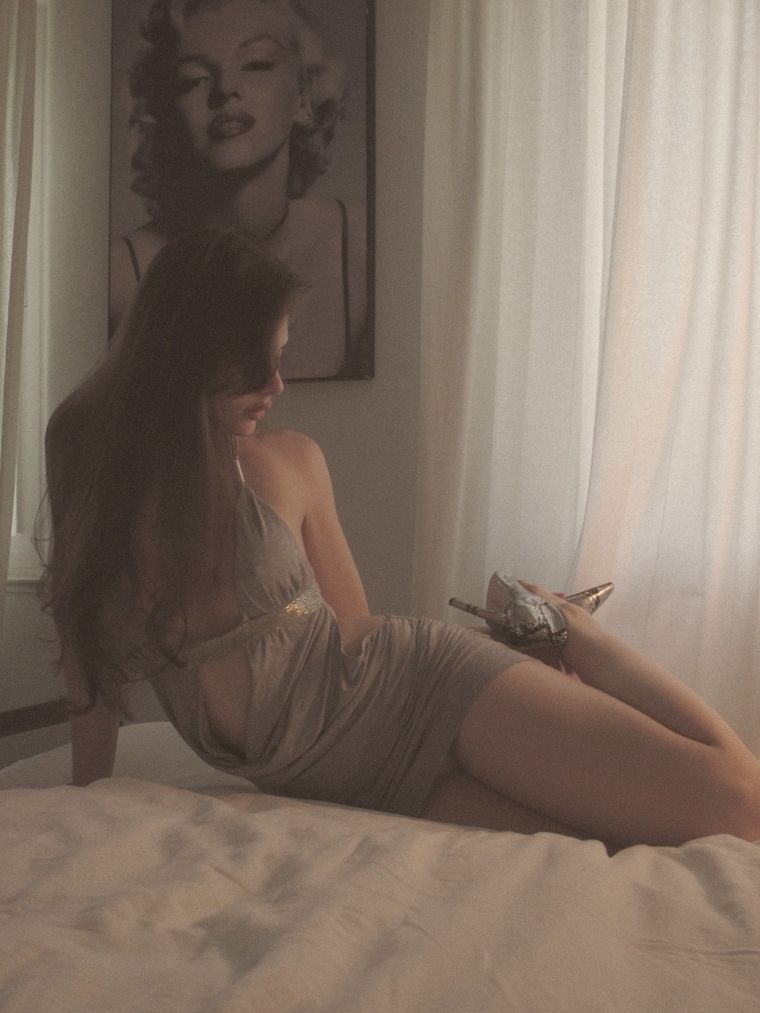
I’m Faye. I was born in Madrid in 2002, moved to Paris at eighteen to study art history at the École du Louvre, and never really thought about leaving. These days I make clothes under the name Maison des Reflets, and I’m married to a man who photographs buildings in Milan and spends a third of the year here with me, doing most of the shopping.
I like black clothes, handwritten letters, flea markets on Sunday mornings and people who laugh louder than I do. I speak four languages and still manage to lose arguments in all of them.
The one photograph here that nobody else took.
Born
Madrid, 22.02.2002
Lives
Nouvelle Athènes, Paris
Studied
Art history, École du Louvre
Work
Founder, Maison des Reflets
Speaks
Spanish, French, English, Italian
Married
Diesel Montresor, Gela, 20.08.2026
ITraining & trajectory
Learning to look
Not a CV: the moments that made me, more or less in order, each with what I kept from it.
2002
Madrid
I was born in Madrid on 22 February, into a household where two languages ran side by side. My mother spoke to me in Spanish and my father in French, and for years I supposed every family did the same, changing language halfway through a sentence according to who was in the room and what needed saying. I still do it without noticing, to the confusion of waiters.
KeptTwo languages, often in the same sentence.
Sundays
The Prado
My father restored paintings at the Prado. On Sunday mornings he would sometimes take me in before the doors opened, sit me on a bench in front of a portrait and go off to work, leaving me with two words: «regarde bien». I didn’t always know what I was meant to be looking at. I looked anyway, for a long time, at hands and faces and paint cracked over three hundred years, and slowly began to see what nobody had pointed out.
KeptThe habit of looking at one painting for a long time.
At fourteen
Black
At fourteen I began dressing almost entirely in black, and have never really stopped. My mother called it a phase, kindly at first and then with rather less patience. It never felt like hiding. Black lets everything else you wear, and everything you say, be seen more clearly.
KeptTen years of a phase, so far.
2020
Paris · École du Louvre
The École du Louvre brought me to Paris, and for the first years it was most of my life here: lectures in the morning, the galleries in the afternoon, and reading until the light went. I arrived knowing very few people and a great deal about paintings, a combination that does not make friends quickly, and spent more of that first year alone than I ever had.
It suited me. I learnt the city on foot, one museum to the next, and by the time I had friends here I also had a Paris entirely my own.
The École finished, at length and with rigour, what my father had begun on those Sunday mornings: how to look slowly. We were trained to describe a work before interpreting it, to say in plain words what is there before deciding what it means. It is harder than it sounds, and I still catch myself skipping the first part.
The lectures I remember best concerned restoration: how each generation has “improved” old paintings in ways the next has had to undo, and how the most respectful treatment of an old object is often almost none. My father had been saying as much over dinner for years. I now apply it to nearly everything, old clothes included: mend what is broken, and let the rest of its life show.
KeptThe discipline of looking slowly, and a firm view on restoration.
2024
The Naviglio
I had come to Milan for the weekend in search of lace, leather and buttons, and on the last Sunday of April 2024, at the antiques market on the Naviglio, I picked up a 1950s folding camera at the very moment a stranger did. How that went is written on the back of his photograph, further down. The photograph leaves out the aftermath.
He bought the camera all the same, for seventy euros, and asked for my number so that he could show me the result. The service was booked four times and cancelled four times, and each time he rang with news nobody had requested. Meanwhile he put a roll of film through it untouched and posted me all sixteen prints. I wrote back about every one, saying first what I saw and only then whether I liked it; the École had done its work. On 14 July, eleven weeks to the day, he arrived in Paris with the prints and nothing else to show me, since the camera remained precisely as I had asked. I have never once let him forget that I was right.
KeptDiesel.
20.08.2026
Gela
He proposed on a Sunday the winter before, in my kitchen in the Nouvelle Athènes. He turned the moka off before he began, knowing himself, and I considered the matter for as long as it took him to wash two cups.
We were married in Gela, in Sicily, on a Thursday, because his grandmother Nunzia is ninety and no longer travels. My mother, Isabela, Emile and my father came down from Madrid and Paris. The day before, my father asked to see Foto Moderna, the photography shop on the Corso where Diesel grew up, and stood for forty minutes before its old painted backdrop with his hands behind his back. It had been repainted twice, he said, and was the better for it; might he keep the sky? He was refused, and given a coffee.
Diesel had written his vows seven times. The fourth draft had a joke about Gela that his mother deleted over his shoulder, and he left the sixth on a train somewhere outside Modane, so a stranger in France now knows more about us than most of his family.
On the day he got as far as my name and began to laugh. The draft stayed folded in four in his jacket pocket, and he said the rest from memory, to me and not to the page, down to the last line, about things that are fine as they are and the next sixty years. He had warned everyone he would laugh; his Zia Rosaria had a handkerchief ready to throw. I told him afterwards that it counted, and I meant it.
KeptA plain gold ring.
09.2026
California
An aunt of Diesel’s in Gela paid for the honeymoon, with a card instructing us to spend it on something foolish, and so in September we went to California. There was a rented house in the hills above Los Angeles with a cat the listing had neglected to mention, a day at the theme park in Anaheim that was entirely my idea and that Diesel grumbled about until we were through the gates, an ice cream I ordered for him that turned out not to be pistachio, and a beach at Malibu where he managed to sit on a peach. On our last morning, north of Santa Cruz, he got up a little before seven and walked to the top of a cliff to watch the fog come in off the Pacific while I slept. He still describes it as though I missed something. I have seen the photographs, and am entirely content with my decision.
KeptForty-one photographs of one beach.
Now
Maison des Reflets
Most of my days now belong to the Maison. Mornings are for drawing, at my desk, before anyone has had the chance to ring. When a piece is being made I spend whole afternoons at the atelier in the 11th, and the evenings are for the post, which I read slowly and answer properly.
It is quieter work than it sounds, and far less glamorous than people imagine when I say I make clothes. A good week is one in which a single seam finally sits as it should. I would not swap it for anything.
KeptThe list, crossed out one line at a time.
IIPersonality
Both are true
People meeting me for the first time at dinner sometimes conclude that I am reserved, and I can see why. At the start of an evening I listen more than I talk, I notice what people are wearing before I notice almost anything else, and I’m in no hurry to tell strangers much about myself. My friends from school find this hilarious, because they remember an entirely different girl.
The confidence never went anywhere; I have only grown choosier about where I spend it. I still dress to be looked at, and I enjoy walking into a room in something nobody else would have tried. It is the rest of me I have grown careful with. I can talk to anyone for an hour and then need a whole afternoon with nobody at all, and I no longer apologise for either.
With the people I love I’m affectionate, more than they tend to expect, and I fuss. Diesel keeps a list of things I’ve said to him, and I’m told that ‘Did you eat? A sandwich over the sink doesn’t count’ is near the top. With work I’m exacting, occasionally to the point of being difficult. I laugh easily and usually first, which has got me into trouble in more than one museum.
Santa Ynez is the story Diesel tells most often about me, so I may as well tell it first. The man at the stables warned us that the bay mare didn’t care for strangers. I went straight into her stall anyway and talked to her in French, and she didn’t seem to mind me in the slightest. He says that afternoon is my whole personality in miniature. I think I just liked her.
IIICuriosities
Small habits
None of these will change your life. They are the small, slightly stubborn things an ordinary week is made of.
Milano Centrale → Paris Gare de LyonSeven hoursWindow seat, always
With Diesel’s year divided between Milan and Paris, a fair part of our life runs on a single train. I have grown fond of the seven hours, whichever of us is making the journey: long enough for most of a novel and a proper sleep, and I have managed both, usually in that order.
N° 0047
French lessons
Diesel is learning French a word a day, in a notebook he keeps beside the shopping list. I help where I can. In front of a great many witnesses he has promised to learn it properly, and not just bakery French. When he asks how it is coming along, I tell him the truth: it’s fine. Nobody understands it, but it’s fine.
Can’t throw away
Letters, every one of them
Ribbons from boxes
Film photographs, including the bad ones
Buttons that have outlived their garments
17:00
Around five o’clock the Paris light turns gold and crosses our flat on a long diagonal, over the floor and up one wall. Whatever I am doing, I stop for a minute or two to watch it go. In summer I sometimes plan the walk home around it.
Getting dressed
I decide what to wear the night before and change my mind in the morning, without fail. The first choice is usually the better. I have known this for ten years, and it has made no difference whatsoever.
IVReferences & favourites
A small collection
Not recommendations: the works I keep returning to, and those that changed the way I look.
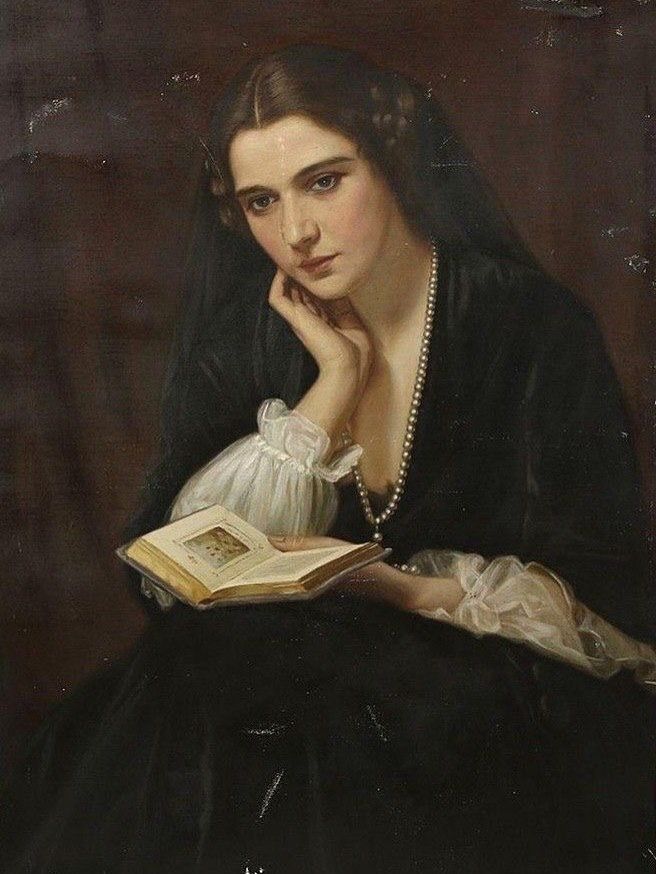
FD·01 Painter unknown, A woman in black, reading. I found her at the flea market in Vanves, propped against a box of empty frames, and paid forty euros for her. She hangs above my desk now. In all that time she hasn’t once looked up from her book, and I’ve stopped expecting her to.
FD·02
Claude Monet, Les Nymphéas
Musée de l’Orangerie, Paris. My favourite museum, and where I go when I need quiet. Monet painted the same pond for the last thirty years of his life and never once got the same picture, and I find that unaccountably reassuring. I sit in the oval room until my breathing slows down. It is also where I met Emile, which is a story for further down the page.
FD·03
Oscar Wilde, The Importance of Being Earnest
I read Wilde for the sentences, and for the way his characters use wit and good manners to avoid ever saying what they mean. It is a skill I admire rather more than I should, and use rather more than I admit.
FD·04
Alessandro Baricco, Silk
A very short novel about a silkworm merchant, a long journey and a letter. I reread it every winter, usually in a single evening. I cry at the same page every time, which I won’t name. I gave Diesel a copy on our first train journey to Paris together, and he had finished it before Turin, which I took as a good sign about him and a slightly worrying one about the book’s length.
FD·05
Solange & Blood Orange
What I play while I work. I spend so much time among old things that the room needs something unmistakably of now, and their records have a body and a city in them, which keeps my desk from becoming a museum. Hear the record
FD·06
wave to earth, seasons
Diesel and I both already had this saved before we met, which neither of us can explain and both of us count as a good sign. It is the one song we never argue about.
VPersonal archive
The people I keep close
Turn the photographs over. The important part is always on the back, and the whole story opens underneath.
Diesel · my husband
The Naviglio, 2024
We met at the antiques market on the Naviglio, both holding the same old folding camera. He wanted it serviced. I told him to leave it as it is. We argued for twenty minutes, in Italian, Spanish and English.
He photographs buildings in Milan, from a studio in Bovisa called Sedici, and he hasn’t touched a client’s object since a Bohemian vase in 2017. He laughed all the way through our vows in Gela. I’d been warned.
His French is coming along. My Italian is further ahead, a fact I mention often.
DieselEmile · my best friend
Between reflections
In the oval room at the Orangerie, the one I go to for quiet, I have a corner I look at, a patch of dark water near the bottom of one panel that most visitors walk straight past on their way to the brighter parts. One afternoon there was a woman on the bench looking at exactly that corner, so intently that I sat down at the far end and pretended to look at something else.
Eventually I said something about the colour, that it was nearly black but not quite. She answered as though she had been waiting for somebody to say it. We carried the conversation out of the oval room, past the shop without buying anything, and halfway across the Tuileries before either of us thought to ask the other’s name.
Emile and I turned out to share far too many small habits for it to be a coincidence: the same corner, the same way of stopping mid-sentence to look at something, the same patience for things other people find slow. With her I never have to explain myself in full. Some things are simply understood.
EmileIsabela · my little sister
Counting the eyelets
For years Isabela was the one who laced me into our grandmother’s old corset before I went out. She would stand behind me at the mirror and count the eyelets aloud as she pulled each cord through, with enormous seriousness, as if one slip would ruin the whole evening.
She has since decided that this makes her my stylist, and I have decided to let her think so. Nobody knows me quite the way a sister does, including the parts I’d rather she didn’t, and she is the only person whose verdict on what I’m wearing I accept without arguing.
IsabelaAmme · my friend from school
Where different worlds met
At school, Amme and I had no reason to meet. We were in different classes, sat with different friends and seemed to belong to opposite ends of the building. She was quiet, devoted to literature and history, top of the year in the humanities and secretly in love with art. I was the loud one, who lived for clothes and paintings and said so to anyone who would listen.
It was an elective on classical painting, with an art workshop attached, that put us at the same table. Between the brushes and the reproductions pinned to the wall, we discovered that our differences were the most interesting thing about either of us.
Talking about art turned into telling each other secrets, and the secrets turned into the kind of laughing that gets you sent out of the room. She taught me to love depth and silence; I taught her to take up a little more room. We are inseparable now, and each of us carries a piece of the other’s world about with her.
Amme
The same tripOne night, two peopleElora & Aire
Elora · a friend from Korea
The beauty of the unplanned
Not long after I finished school, I did something I rarely allow myself: I travelled without thinking too hard about where I was going. There was no proper itinerary, my bag was too small, and I had more or less decided to say yes to whatever turned up.
One night that decision took me into a club that had never been part of any plan, all coloured lights and music too loud to think in. I had made an effort with what I was wearing, as I always do, and a girl at the bar leant over to make a very funny remark about it. That was Elora. Five minutes later we were talking like people who had known each other for years.
We danced until the lights came up, then stood outside talking until it was properly morning. The trip was meant to be a small adventure before everything else began. It left me with a friendship that has lasted long after the last song.
EloraAire · a friend from Korea
What the night left behind
Aire arrived later on the same night, somewhere between one song and the next. I honestly can’t remember who spoke first. What I remember is a joke that went on far longer than it deserved to, the three of us laughing at it anyway, and the feeling that nobody was in any particular hurry to go home.
It should have stayed one good night among several on that trip, and I fully expected it to. Instead he became one of the things I brought back with me. Most of what I remember from those weeks has nothing to do with the places I saw. It is the people who were still there once I was home.
Aire
And Adela, always: in every bow I tie properly. A.
Everything I make starts with something I kept.
Most of what you have just read finds its way into the work sooner or later, though rarely where you would expect: a habit becomes a fastening, a friend a reason to add sleeves, a painting a colour. I don’t plan it. It is what happens when the person drawing the clothes is also the one who lived all this.
The four pieces are in the Boutique, and you already know how to reach me.